
Thanks to @alimcforever (https://alimcforever.substack.com/) for the inspiration
There is a comfortable myth that big energy companies love to tell, that humanity spent the 19th and early 20th centuries huddled in dark, freezing rooms, waiting for industrial power grids to save them. According to this narrative, we relied entirely on centralised fossil fuels out of necessity, and we are only now attempting to ‘invent’ green energy because oil and gas are running out and their role in causing the climate crisis has become undeniable.
When we check the historical records, that story falls apart.
We didn’t start with centralised fossil fuels and gradually invent green energy. In the beginning, we had decentralised, self-reliant, free power. What followed was a deliberate, decades-long campaign by corporate monopolies backed by state regulation and tax subsidies to dismantle local self-sufficiency and send us all a monthly bill.
Here is the real story of how we ended up locked into the grid, why it matters today, and how communities are finally breaking free.
Part 1: The Forgotten Pioneers of Free Energy
Long before the modern climate movement, inventors and communities were already harnessing the wind and sun to power their daily lives.
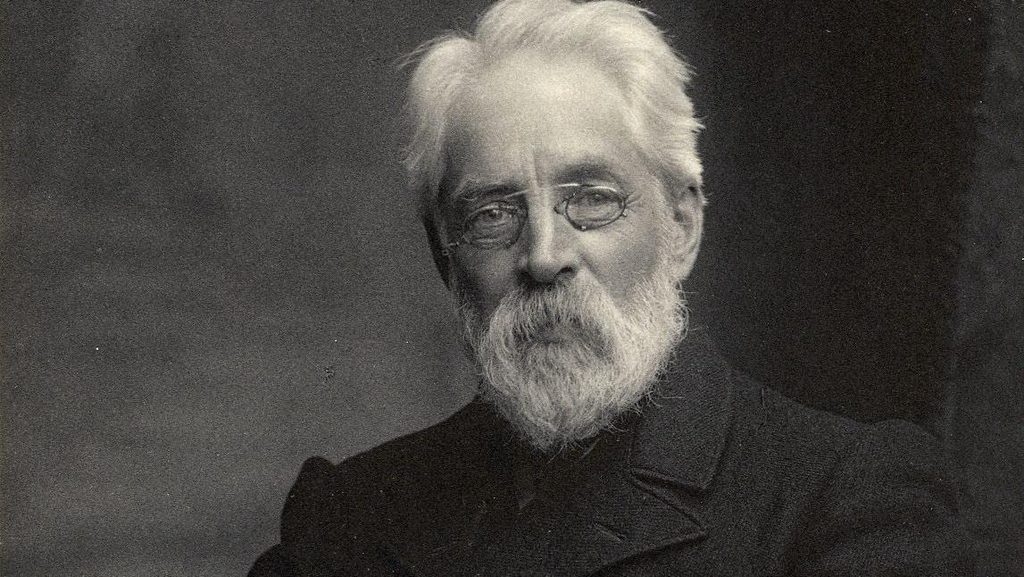
In July 1887, Professor James Blyth of Anderson’s College (now Strathclyde University) built the world’s first electricity-generating wind turbine at his holiday cottage in Marykirk, Aberdeenshire. Blyth used his cloth-sailed turbine to charge accumulators that lit his home. When he offered the surplus, free electricity to light Marykirk’s main street, the local residents famously declined, believing electricity was the work of the Devil. Undeterred, Blyth built a larger wind system to power the Montrose Lunatic Asylum, where it ran successfully for years.
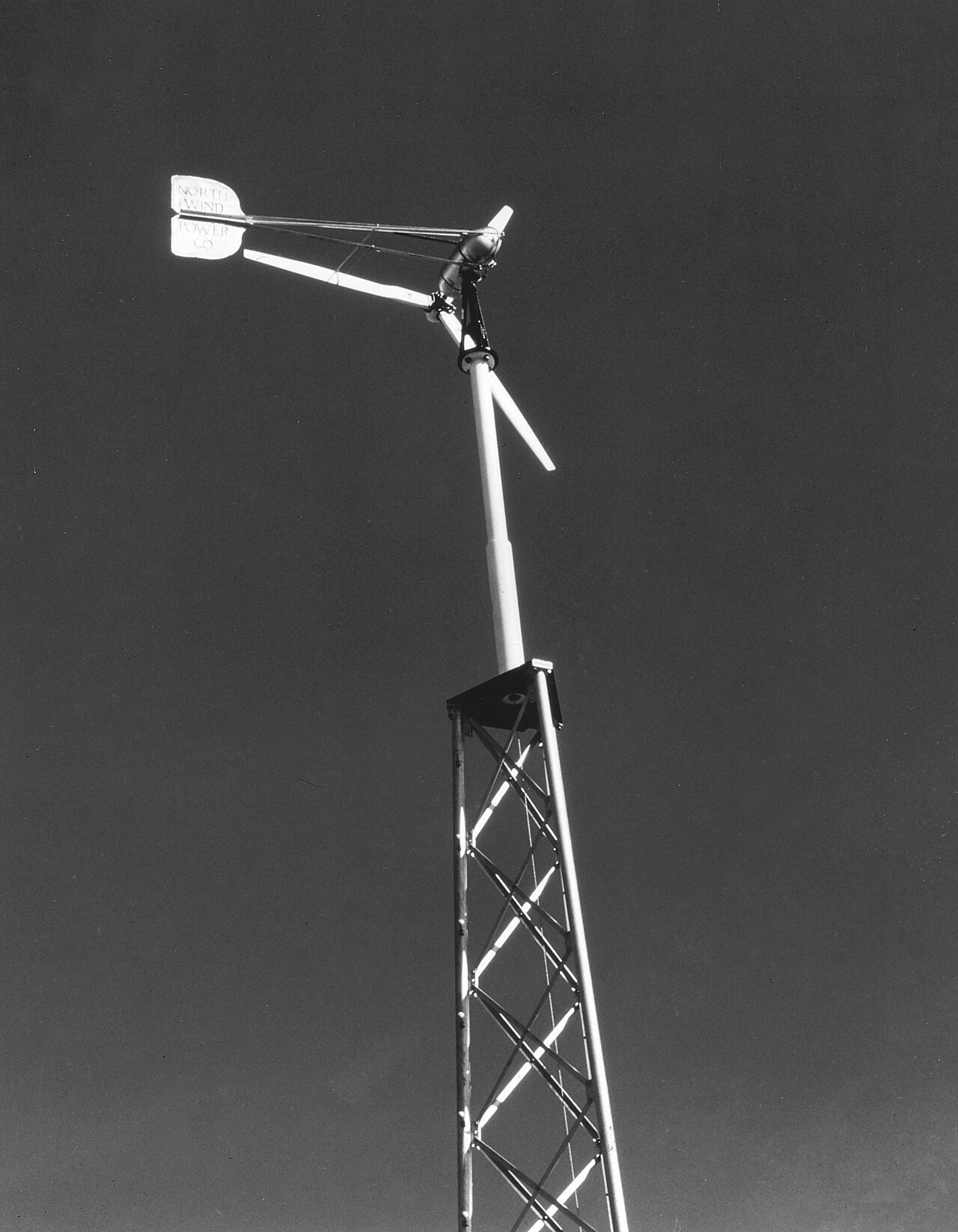
In the 1920s, brothers Joe and Marcellus Jacobs took the gear assembly out of an old Model T Ford to build a prototype wind generator. By 1928, they incorporated the Jacobs Wind Electric Company. Over the next 25 years, they sold over $100 million worth of wind systems across the American Midwest.
These setups were remarkably simple. Three durable wooden blades drove a direct-current (DC) generator, wired into a bank of glass lead-acid batteries sitting in the farmhouse basement. The farmer paid once for the equipment, and for the rest of their life, their light, radio, and water pumps ran on free wind. The design was so reliable that explorer Richard E. Byrd took a Jacobs turbine to Antarctica in 1933, and when his team checked back on it in 1955, it was still spinning.
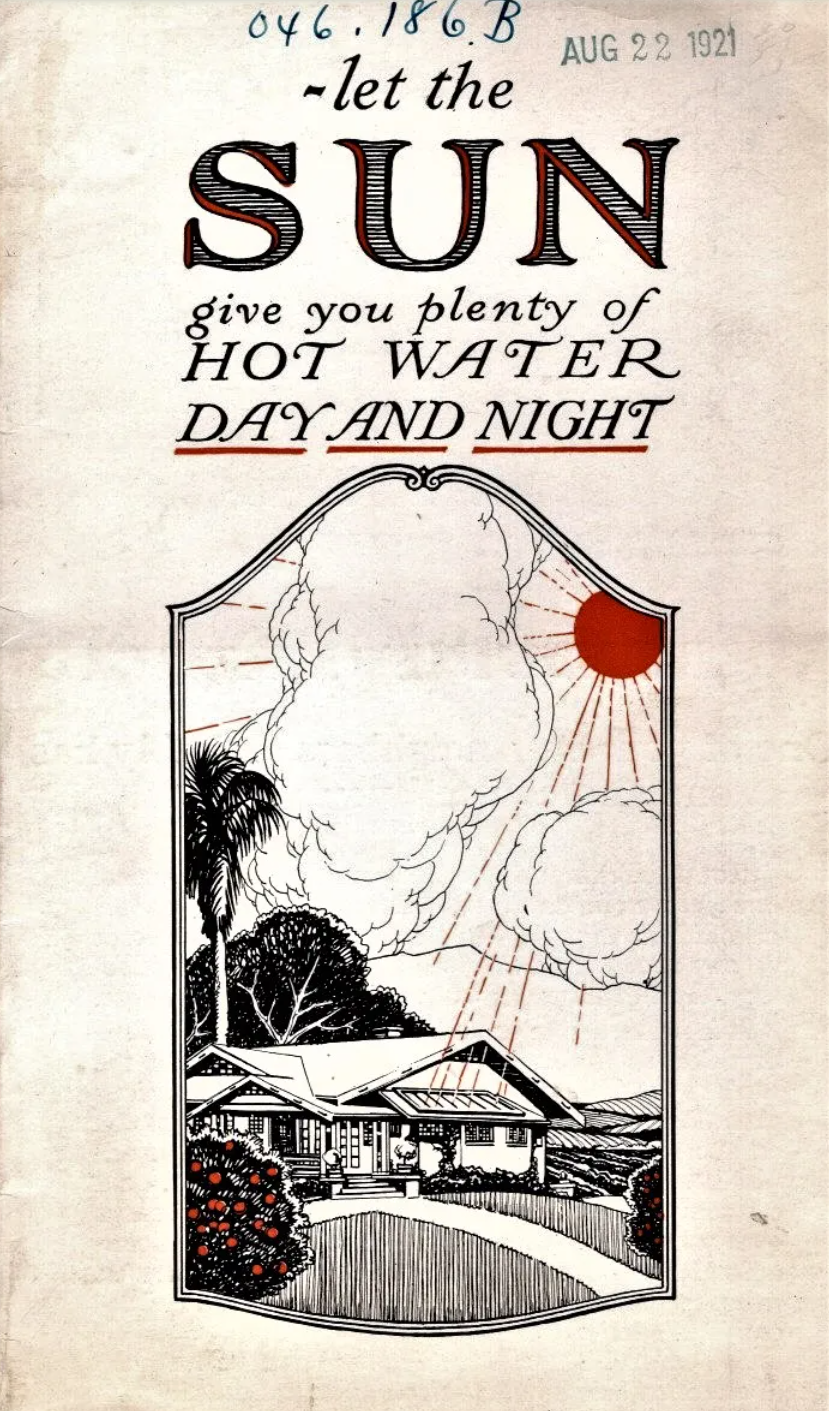
In sunny California, inventor William J. Bailey patented the Day and Night solar water heater in 1909. By placing copper pipes in a glass-covered box and connecting them to an insulated storage tank, he created a thermosiphon system that kept water hot overnight without pumps, fuel, or monthly costs. By 1920, thousands had been sold, and by 1941, an estimated 50% to 80% of all new homes in Miami, Florida, heated their water using the sun.
These people were completely energy-independent. They didn’t need a utility company. And for industrial energy investors, that was a massive structural problem.
Part 2 : Inventing the “Natural Monopoly”
If households generate their own power for free, how do you build a multi-billion-dollar energy industry? You outlaw competition and turn energy into a mandatory monthly subscription.
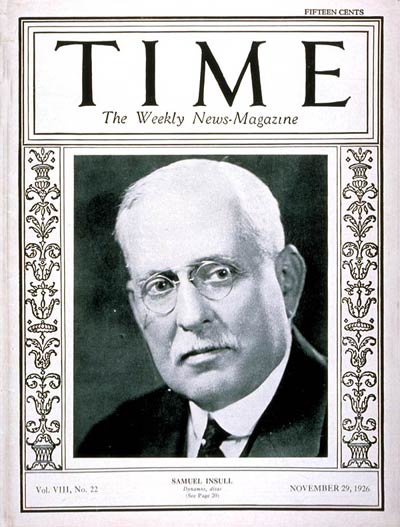
Enter Samuel Insull. Insull started his career as Thomas Edison’s private secretary before taking control of the Chicago Edison Company in 1892. At the time, urban electricity was chaotic: dozens of small private firms laid competing wires down the same streets, charging extortionate prices. In response, local towns and cities began building their own municipal, non-profit power stations to deliver low-cost public electricity.
To Insull, non-profit public power was an existential threat. So, he changed tactics.
In his landmark 1910 address, “The Obligations of Monopolies Must Be Accepted,” Insull pushed a new concept: the “natural monopoly.” He argued that instead of allowing competing private companies or municipal non-profits, the state government should grant a single private utility exclusive rights over a region. In exchange, the utility would let a state commission approve its billing rates.
Insull used the law to guarantee his profits. Under this model, state governments guaranteed utilities a risk-free “return on investment,” extracting money from a captive public who had no legal choice but to buy from one provider. Insull went on to pioneer multi-tiered holding companies, leveraging $27 million of his own cash into a heavily leveraged $300 million empire controlling utilities in 5,000 towns across 32 states.
Part 3: How Distributed Energy Was Dismantled
With state-sanctioned monopolies secured, central utility networks spent the middle of the 20th century dismantling decentralised power through three main mechanisms:
1. Subsidised central grids. In 1936, the US signed the Rural Electrification Act (REA). While presented as a public good, the REA did not give grants to farmers to buy their own wind turbines. Instead, it gave massive, low-interest loans to utility companies to build heavy centralised grid lines connected to coal plants. By flooding rural areas with heavily subsidised, artificially cheap grid power, the government undercut the upfront cost of small wind turbines. By 1956, the market for farm wind generators was dead.
2. Predatory pricing and lobbying. Following natural gas discoveries in the 1920s and 30s, gas utilities offered natural gas at below-cost rates specifically to undercut solar water heaters. They lobbied local councils to update building codes, making rooftop solar installations complicated and expensive. Gas companies eventually bought out Bailey’s Day and Night solar company and forced it to manufacture gas-burning water heaters instead.
3. Mandatory connection laws. Building and housing codes were rewritten so that connection to the centralised utility grid became a legal requirement for home habitability. Even today, building a residential home entirely off-grid in many suburban jurisdictions can result in fines or having the property declared uninhabitable.
Part 4: From Highland Hydro to the ‘Gas price trap‘
The story in the UK and Scotland followed a strikingly similar trajectory toward central control and today, consumers are paying the price.
After James Blyth’s early work, electricity in Scotland began as local municipal undertakings (like the Glasgow or Aberdeen Corporation lighting departments) and private estate micro-hydro schemes. But mid-century policy forced consolidation. In 1943, Secretary of State Tom Johnston established the North of Scotland Hydro-Electric Board to dam Highland glens, bringing state power to remote crofts. In 1947, the entire UK power system was nationalised, creating centralised electricity boards.
Then came the 1989 privatisation under Margaret Thatcher. The state assets were sold off, creating vertically integrated regional energy giants like ScottishPower and SSE.
Today, Scotland generates the equivalent of over 100% of its gross electricity consumption from renewable sources, mostly wind. Yet Scottish residents face some of the highest energy bills in Europe. Why?
The UK’s wholesale electricity market operates on marginal cost pricing. This means the most expensive generator needed to meet real-time demand (almost always a fossil-fuel natural gas plant) sets the price for all electricity on the grid, even if that electricity was generated by low-cost local wind.
We get grid constraints because the high-voltage transmission grid was built decades ago for central coal plants, so it cannot carry all of Scotland’s wind power south to English cities during peak winds. Grid operators pay Scottish wind farms “curtailment fees” to turn off, while paying gas plants in the south to turn on, a double cost passed directly onto our monthly bill.
Part 5: Breaking the Cycle: How Communities Win Back Energy Sovereignty
We didn’t end up on a fossil-fueled, centralised power grid because clean energy was impossible. We built it because centralised fossil fuels allow corporations to control energy production and charge humanity a permanent monthly subscription.
To break that cycle, communities across Scotland and the UK are turning back to the ‘decentralised playbook’
Community Ownership Models
Places like the Isle of Eigg run their own off-grid power company (Eigg Electric), combining hydro, solar, and wind with a centralised battery bank to deliver continuous power to residents without relying on energy multinationals. Island trusts on Gigha and Westray own commercial wind turbines, funnelling 100% of the profits back into social housing and local warmth funds.
Local microgrids and shared battery storage
By pairing rooftop solar PV with neighbourhood-scale battery systems, local housing developments can store power generated during the day and consume it locally at night, bypassing the wholesale market and avoiding inflated peak grid tariffs.
Municipal Energy infrastructure
Councils are building large-scale district heating networks, such as river-source heat pumps, to deliver low-cost heat directly to social housing and public buildings, freeing households from reliance on volatile gas prices.
The idea that we are entirely dependent on centralised energy monopolies is not an immutable law of nature, it is a business model invented by Samuel Insull a century ago!
We had the wind in 1887, and we had the sun in 1909. The path out of high energy bills and fossil-fuel dependency isn’t just about building bigger corporate wind farms out at sea, it is about rebuilding community ownership, decentralising generation, and taking back control of the power right where we live.
References and further reading
Early wind and solar History
- Blyth, J. (1888).“On the Application of Wind Power to the Generation and Storage of Electricity.” Transactions of the Philosophical Society of Glasgow. * Read the historical paper on Blyth’s 1887 turbine at the Royal Philosophical Society of Glasgow Archive. *Detailed historical overview by the University of Strathclyde Archives: Professor James Blyth.
- Perlin, J. (2013).Let It Shine: The 6,000-Year Story of Solar Energy. New World Library. *A summary of William J. Bailey’s Day and Night solar heater history is available on John Perlin’s research site: Solar Collector History & John Perlin’s Research.
- Righter, R. W. (1996).Wind Energy in America: A History. University of Oklahoma Press. *Excerpts and overview of the Jacobs Wind Electric Company at the U.S. Department of Energy (NREL) Wind History Timeline.
Monopoly regulation and utility History
- Insull, S. (1910).“The Obligations of Monopolies Must Be Accepted.” Address delivered to the National Electric Light Association. *Digital archives of Samuel Insull’s addresses and papers are held at the University of Chicago Library Special Collections: Samuel Insull Papers.
- Beito, D. T. (2000). From Mutual Aid to the Welfare State: How Fraternal Societies and Charities Aided the Working Class. University of North Carolina Press.
- Hughes, T. P. (1983).Networks of Power: Electrification in Western Society, 1880–1930. Johns Hopkins University Press.
- Read the original 1936 legislation on the U.S. National Archives / Federal Register.
UK and Scottish energy context
- Johnston, T. (1952).Memories. Collins (Autobiography of Tom Johnston, Secretary of State for Scotland, describing the creation of the North of Scotland Hydro-Electric Board in 1943 to bring public power to the Highlands) * Historical records of Tom Johnston’s 1943 Hydro Board at SSE Heritage Archives.
- Ofgem (2023). Ofgem: How the wholesale electricity market works.
- Scottish Government (2023).Scottish Government: Onshore wind policy statement.
Community Energy and off-grid models
- Isle of Eigg Heritage Trust (2020). Case study and technical details of the community-owned grid: Isle of Eigg Heritage Trust: Eigg Electric.
- Community Energy Scotland (2022).Guides on building and funding local community generation: Community Energy Scotland Resource Hub.