
There are moments in life that gently test your character, and then there are moments that grab you by the collar, shove you outside at dawn into minus temperatures, and ask, “So, how resilient do you think you are?”
For me, that moment arrived in rural Aberdeenshire during the coldest week of the last twelve months, during the heaviest snowfall (it snowed for six days in a row) in living memory. When our heating system—already an object of mild suspicion—finally decided it had had enough of this modern world and quietly opted out. A day later, a water pipe burst and the day after that we lost electricity in half our home. Things really do come in threes.
We live off the gas grid in an old stone-built farmhouse (as do many in this area), which sounds charmingly self-sufficient when you say it quickly to people in cities. It conjures images of independence, sturdy insulation, and perhaps a log burner crackling away while snow falls artistically outside. What it actually means, in practice, is that when the heating breaks and no one can get to you because drifts are six feet deep, there is only you and what you have in place. I’m ashamed to admit it, we didn’t have a lot.
Day One: Denial, Layers, and Optimism
The first morning, the house felt “a bit fresh.” This is a phrase you use when you are not yet emotionally ready to accept the truth. I put on a jumper. Then another jumper. Then the sort of socks normally reserved for camping. I told myself the heating just needed encouragement.
It did not.
By lunchtime, it was clear that the system had fully downed tools. Radiators were cold, pipes were making noises that suggested disapproval, and the indoor temperature was drifting ever closer to “safe to leave ice cream out on the worktop.” Outside, the weather continued to do its thing with impressive commitment.
Still, I remained upbeat. After all, humans have survived worse, I thought, confidently ignoring the fact that most of those humans had better insulated homes (or do they?) and significantly lower expectations. (In my experience, the opposite is true. We expect our heating to work, we expect the lights to turn on when we flick the switch. In my experience, most people’s expectations aren’t based on any solid resilience whatsoever!)
Day Three: The Myth of Resilience
The inside thermometer temperature in our hall read 6 degrees.
By the third day, humour became less optional and more of a survival strategy. We had developed a complex system of zoning the house, based entirely on which rooms were least hostile. Doors were closed with military precision. The dog became a pass-the-parcel style, furry hot water bottle. Tea became a lifestyle choice rather than a beverage.
This is when the concept of “resilience” began to unravel for me.
We talk about resilience a lot, especially in rural areas. There’s an assumption that if you live somewhere remote, you’re tougher, hardier, better prepared. And to an extent, that’s true. We own more torches and waterproofs than is strictly reasonable. We know where the stopcock is. We can dig a car out of snow without crying (much).
But modern rural life is not the self-sufficient idyll we sometimes pretend it is. It’s a delicate balancing act of systems: electricity, fuel deliveries, spare parts, and someone, somewhere, being available to fix things. When one of those systems fails—during the coldest week of the year—it becomes very clear how thin that resilience actually is.
Day Six: I am God and yet I am nothing
Inside thermometer temperature read 3 degrees.
By day six, our willpower was waning significantly. The novelty of seeing your breath in every room apart from one had worn off. Despite my wife’s unbelievable constitution and good humour, things were getting “tetchy”.
I had been googling a lot and phoning engineers for days to try and get them out. In the end, after one last Hail Mary Youtube session, some Allen Key and old rags work, the heating kicked back into life.
I felt like Dr Frankenstein. “I have produced life! I am GOD!” I shouted outside, much to the alarm of our new, elderly neighbours.
I would like to say that I didn’t strut back into the house, but that would be a lie. Later that evening, while assessing the near week of living in a fridge, I reflected on how resilient we had been as human beings and how un-resilient (what’s the opposite of resilient? Vulnerable?) our systems were – not just in our home but across our communities. How many people live in fridges waiting to happen?
Cold Is a Very Effective Teacher
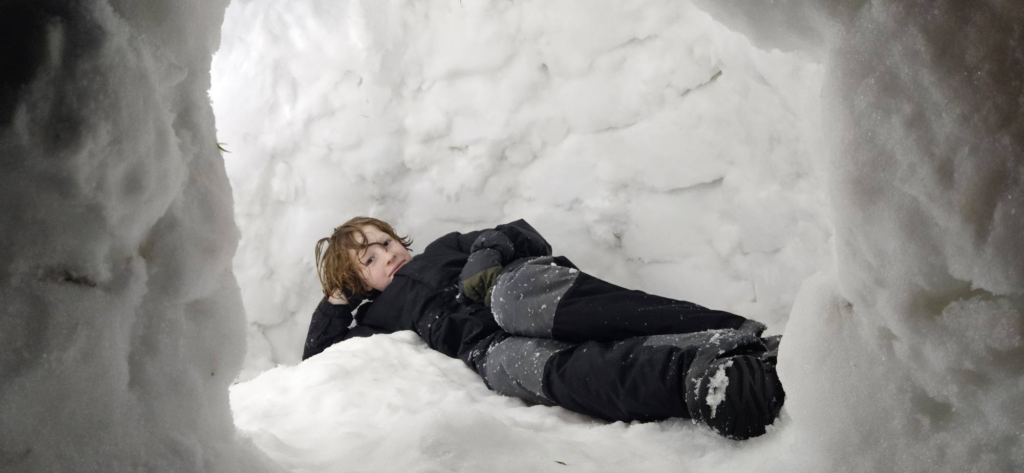
Cold strips things back. It clarifies priorities. It also exposes the flaws in your house that you normally ignore. I learned which windows were merely decorative suggestions of insulation. I learned that stone walls have long memories of winter. I learned that moving from one room to another can feel like crossing a small climatic border.
Most of all, I learned that “we’ll cope” is not the same thing as “this is sustainable.”
Enter the Bigger Picture (And It’s Even Colder)
Somewhere around day five — wrapped in a blanket, contemplating whether it was socially acceptable to wear a hat indoors forever—my thoughts drifted to the Atlantic Meridional Overturning Circulation. As one does. Latest scientific research states that there is close to a 50% chance of the Northern part of it collapsing this decade.
The AMOC, for the blissfully unburdened, is a massive system of ocean currents that helps keep the UK relatively mild. If it weakens or collapses, north-west Europe doesn’t just get “a bit chillier.” We get something closer to Scandinavian or even sub-Arctic conditions, but without the infrastructure, housing, or cultural readiness. What’s the first US State you come to if you head directly west from Glasgow? Alaska. That’s how far north we really are.
And that’s when the penny dropped.
If a single broken heating system during one cold week can push a household to the edge of its comfort — and occasionally its sanity — what does that say about our preparedness for a genuinely colder future?
It’s Not Just About Temperature
The problem isn’t just the cold. It’s the knock-on effects. Off-grid heating often means reliance on oil, LPG, electricity, or biomass. Each comes with vulnerabilities: price volatility, supply chains, power cuts, maintenance delays. In rural areas, repairs take longer, parts take longer, and help isn’t always at hand. A colder climate means less (or no) food production, other services start to fail.
If the AMOC were to weaken significantly, colder winters wouldn’t be a novelty. They’d be the baseline. Heating systems would be under constant strain. Fuel poverty would deepen. Homes like ours — old, rural, characterful, and energetically questionable — would become liabilities rather than assets; essentially cold storage.
And that reality isn’t seeping through to people.
Lessons Learned (The Hard Way)
Sure, this time, the heating was fixed. Warmth returned. Circulation resumed — both in the pipes and in our fingers. But the experience lingered.
I now think differently about resilience. It’s not about stoically enduring discomfort while wearing four jumpers and pretending you’re fine. It’s about redundancy, preparation, and honest assessment. It’s about asking uncomfortable questions before you are forced to.
Questions like:
- What happens when systems fail?
- How do rural homes adapt to a colder climate?
- Who gets left behind when resilience is assumed rather than built?
- Why is no one talking about and taking action on AMOC collapse?
Final Thoughts from a Now-Warmer House
Living in rural Aberdeenshire is still a privilege. The quiet, the beaches, the people, the space, the stars — it’s worth a lot. But that cold week was a reminder that charm does not equal robustness, and tradition does not equal preparedness.
If the AMOC collapses, we won’t be able to laugh it off with an extra blanket and a strong cup of tea. We’ll need homes that are genuinely fit for the climate they’re in (or mass emigration?), energy systems that bend without breaking, and a much more honest conversation about what resilience really means.
In the meantime, I’ve kept the hat. And stopped being God – minutes after the heating came on my youngest son, 7, beat me at table football…… So I’m back being dad. But a dad that will be helping his kids learn about resilience more often than he already harps on about it….
Scotland isn’t ready for AMOC collapse. How many people live in homes that aren’t properly insulated or who have a backup heat source? Equally, we’re visually bamboozled by a constant circus of sporting events and other news, deliberately pumped into our senses to distract us from the almost incomprehensible reality of our plight. You know how the Roman hierarchy stopped people worrying about stuff and revolting? They put on more games…. They distracted them.
It seems that a lot of what is going on across the globe is a distraction from what needs to happen to save our planet. Meanwhile billionaires buy and build bunkers in the vain hope they will survive catastrophe. 2026 needs to be the year that we stand together, across countries and continents and build the resilience necessary and head towards a thriving future.
That’s the cold truth.