The Big Short…
If you’ve seen or read The Big Short, you’ll remember the rating agencies — those intermediaries who were supposed to independently assess financial products but instead kept stamping “AAA” on financial bin‑fires. Why? Because the banks paying them would simply walk down the street to a more “flexible” agency if they didn’t.
Swap out Wall Street for Scottish community empowerment. Swap out mortgage‑backed securities for consultation responses. Swap out bankers for government departments.
Suddenly the satire writes itself.

Intermediaries — the networks, alliances, hubs, collectives — were created to amplify community voices. To speak truth to power. To say the uncomfortable thing. But when the referee is paid by one of the teams, there’s a danger you don’t get whistle‑blowing. You get polite coughing. Sometimes even a wee apologetic throat‑clear, followed by a PowerPoint.
Don’t get me wrong, there are voices out there who will say what needs to be said regardless of the audience. But those voices are being squeezed into a smaller group — like the last few crisps at the bottom of a pack that’s mostly air, they’re getting backed into a smaller, saltier corner.
AAA‑Rated Community Feedback: The Palatability Problem
In The Big Short, the rating intermediaries didn’t lie because they were evil. They lied because they were trapped. If they told the truth, the banks would take their business elsewhere.
Intermediaries in community life face the same gravitational pull.
Communities send in raw, honest, sometimes furious feedback. Intermediaries read it, nod, agree… and then begin the softening process. Because if they send the real version — the version that says the policy is broken, the funding is insufficient, or the strategy is delusional — they risk losing the very funding that keeps them alive.
So the message gets downgraded from:
“This policy is harming communities.”
to
“We note some opportunities for improvement.”
And from:
“We need structural change.”
to
“We suggest exploring a pilot to consider alternative approaches.”
It’s the community‑sector equivalent of slapping AAA on a consultation response that should have been labelled
“Caution: Contains Reality.”
I’ve sat in many consultation meetings with good people — hard‑working, principled people who care deeply about communities, their cause, their well‑being, their future — who’ve openly sighed or voiced their concerns about the softening of responses. It’s debilitating. It’s demoralising. It’s like watching someone try to shout through a pillow.
The Human Bit: Bills, Kids, Mortgages, Survival
Here’s the part The Big Short didn’t dwell on: people have bills.
Intermediaries aren’t faceless institutions. They’re humans. I have friends who work within a number of intermediary organisations. (Friends who will read this blog, disagree with me and still remain friends – I hope) My wife works in another intermediary. The human aspect is very close to home for me. They’re people with worries, with responsibilities. They’re humans with:
- Mortgages that don’t care about political bravery
- Children who need school shoes every August
- Energy bills that behave like luxury items
- Groceries that cost more every week
- Rent that rises faster than a right wing MP when a suspected donor rings the doorbell
And let’s be honest: nobody wants to be the intermediary who bravely speaks truth to power… and then has to explain to their landlord or mortgage provider that they’ve heroically lost their salary.
It’s hard to be a revolutionary when your boiler is making that noise again and you’ve not got the insurance to cover it.
Intermediaries aren’t villains. They’re people trying to survive inside a system that punishes honesty and rewards palatability.
But — and here’s the punch — understanding the behaviour doesn’t mean excusing the consequences.
And Then There’s Government: The Other Softening Machine
If intermediaries soften community feedback to stay funded, government softens the actual changes needed to stay elected. Real structural change — the kind communities often ask for — is usually expensive, disruptive, or unpopular. And unpopular things risk votes. So governments often choose the path of least resistance:
- A working group instead of a reform
- A pilot instead of a policy shift
- A consultation instead of a commitment
- A “listening exercise” instead of action
It’s not that governments don’t know what needs to be done. It’s that doing it might upset the electorate.
And let’s be fair: if you were in government and someone said, “Here’s the correct thing to do — but it will make half the country furious,” you might also reach for the nearest “strategic review” like it’s a comfort blanket.
But here’s the uncomfortable truth: The real role of government is to do what is correct, not what is immediately popular.
Democracy isn’t supposed to be a popularity contest. People think Democracy is voting on EVERYTHING. It’s not. It’s supposed to be stewardship — making decisions that safeguard long‑term wellbeing, even when those decisions are temporarily unpalatable. When you’re at the top you are meant to have more knowledge and a longer term view. You’ve been elected to make those decisions.
While the populace will judge you in the now, it’s history that will write your legacy.
Yet governments, like intermediaries, are made of humans. Humans who also have bills, mortgages, families, careers, reputations, and political futures.
So the softening continues.
Communities ask for bold change. Intermediaries soften it. Government softens it again. And what finally emerges is a policy that has all the impact of a fight between a marshmallow and a sponge.
(Note: I may be being particularly harsh here. In some cases policy decisions have made significant positive changes, particularly in the health sector. But those change are few and far between in my opinion.)
The Consequence: A System That Can’t Hear the Truth
When intermediaries soften community messages, and government softens the changes needed, the whole system becomes a polite echo chamber. Everyone nods. Everyone smiles. Everyone agrees to “explore opportunities.” And nothing fundamentally changes.
It’s like watching The Big Short but in slow motion — the same structural flaws, the same incentives, the same avoidance of reality — just with fewer suits and more flipcharts.
Communities lose their voice. Government loses the feedback it actually needs. And the country loses the chance to make the bold changes required.
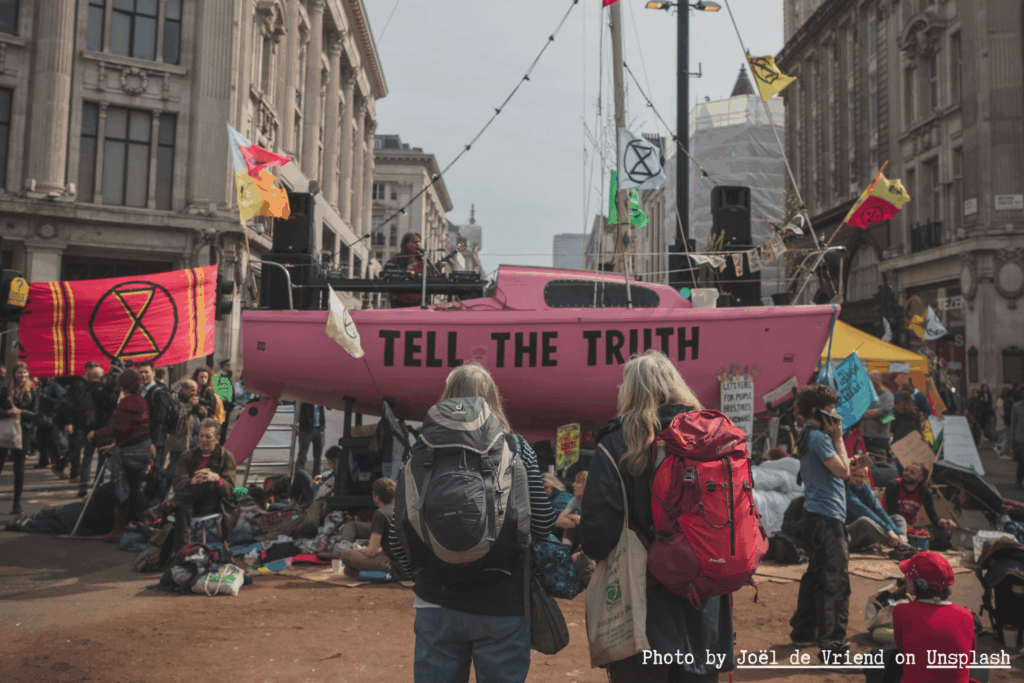
The Big Short Lesson: Independent Funding Isn’t a Slogan — It’s a Structure
In The Big Short, the system collapsed because intermediaries couldn’t tell the truth. In community life, the collapse is quieter — but just as damaging.
If intermediaries are funded by government, they will inevitably — even unintentionally — shape their responses to remain palatable. If governments fear losing votes, they will inevitably soften the changes needed.
The solution isn’t to scrap intermediaries or blame government. It’s to fund intermediaries in ways that protect independence and support governments to make long‑term decisions even when they’re unpopular.
Communities don’t need AAA‑rated consultation responses. They need the truth. And governments don’t need palatable feedback. They need honest feedback.
Because doing what’s correct for longer term sustainability — not what’s popular — is the whole point of political leadership.
Conclusion: Building Something Better (Without Waiting for Permission)
Here’s the part where most polite policy blogs would say something soothing like: “We must work together within existing structures to create incremental change.” But let’s be honest — if the existing structures were capable of delivering the change communities actually need, we wouldn’t be having this conversation. We’d be too busy celebrating.
So here’s the slightly cheeky conclusion:
The Solution: Financial Independence, Non‑Compliance, and Building a New System
The only way intermediaries can stop behaving like community‑sector rating agencies — softening reality to keep the lights on — is to remove the incentive to soften anything in the first place.
That means financial independence.
Not “a bit more flexible funding.” Not “longer grants.” Not “a better relationship with government.”
Actual independence — the kind where intermediaries can say:
“This policy is a disaster,”
without worrying that their next payroll run will look like a horror film.
1. Financial Independence: The Backbone of Honesty
Intermediaries need funding streams that don’t depend on government approval. That could mean:
- Community‑owned revenue models
- Membership‑based funding
- Local cooperative income streams
- Philanthropic or trust‑based independence
- Shared infrastructure that reduces costs and increases autonomy
When intermediaries aren’t financially beholden to government, they can finally do their job without the fear that currently comes with it.
2. Strategic Non‑Compliance: The Courage to Say “No”
Non‑compliance doesn’t mean chaos. It means refusing to play along with systems that reward palatability over honesty.
It means intermediaries saying:
“We’re not softening this consultation response.”
“We’re not endorsing a policy that doesn’t work.”
“We’re not participating in a process designed to produce polite silence.”
Non‑compliance is simply the refusal to pretend.
It’s the community‑sector equivalent of Mark Baum in The Big Short saying, “This is fraud,” while everyone else nervously shuffles papers.
3. Build a New System Outside the Current One
The current system is built on incentives that produce softening, avoidance, and political risk‑management. You can’t reform that from the inside — you can only outgrow it.
That means building:
- New networks that aren’t dependent on government funding
- New democratic structures that reflect community reality, not political palatability
- New forms of accountability that don’t rely on ministerial approval
- New community‑led institutions that can speak boldly because they’re not afraid of losing funding
This isn’t rebellion. It’s evolution. It’s community empowerment with a spine.
It’s the same logic that drove the protagonists of The Big Short to build their own models, run their own numbers, and trust their own analysis — because the existing system was too compromised to tell the truth.
The Real Punchline
Intermediaries sometimes soften community voices because they’re financially dependent. Government softens necessary change because it’s politically dependent. Communities suffer because both softenings cancel out the truth. The only way to fix this is to stop feeding the system that rewards palatability and start building one that rewards honesty. Financial independence gives intermediaries a stronger backbone. Non‑compliance gives them courage. A new system gives communities a voice that can’t be diluted.
Authentic, Autonomous, and Actuality. -That’s the real AAA rating.